

Three takes through nine games of the Chess World Championship
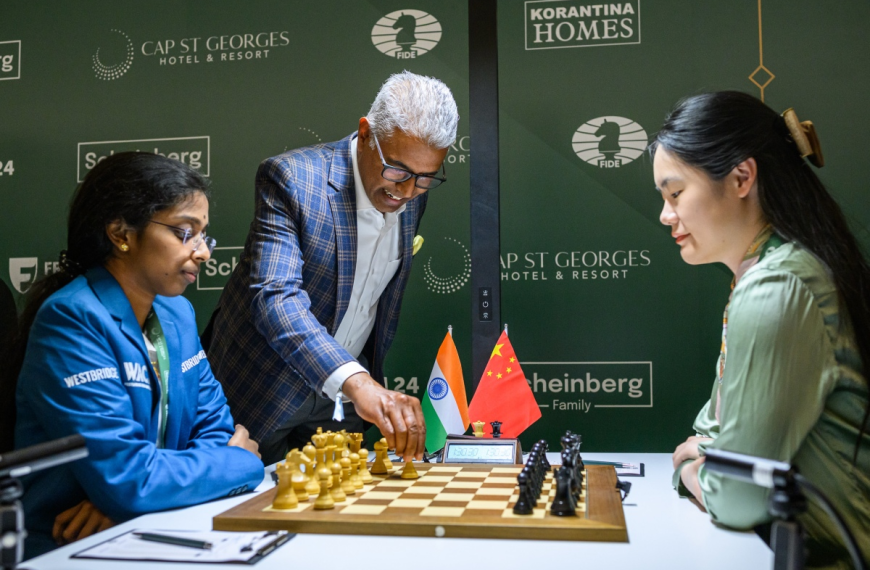
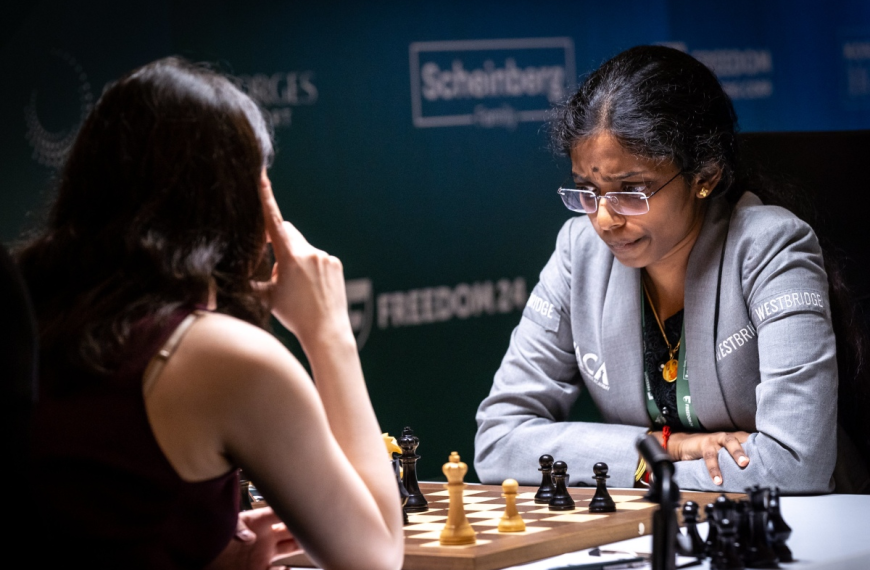
The 2024 Chess World Championship match between Ding Liren and Gukesh D sits tied 4.5-4.5 going into the third rest day. There are five games to play, and it is anyone’s match to win. Here are three takes on what we’ve learned through nine games, and what we should expect the rest of the way.
Using your brain
The strongest impression from the match is that Ding and Gukesh are doing a splendid job showing the difference between an engine evaluation and the ease of playing a position in practice. In several games, one player has had what we could call a significant objective advantage, according to the machine, yet the game ended with a split point.
There are a few reasons for this. The most important one to remember is that a computer evaluation is a number based off of perfect play. That becomes very difficult to live up to when there is only one move that keeps the advantage, and even more so when it is a difficult move to find. A good example is Gukesh’s quite good 30. Qf4 in game 7, when 30. Be3!! would have kept him on the path to victory. GM Matthew Sadler has been doing match commentary with Leela’s engine that has the fascinating feature of showing the estimated probability of a white win, black win, or draw after every move, and every possible move! It is also a good reminder that 5% is not 0%, and 0.3 on Stockfish is not the difference between a win/loss and a draw.
Ding deserves a lot of credit for putting up challenging defensive resistance to force his opponent to find narrow paths to win.
Having said that…
With so many advantages, and with the calibre of player in a World Championship, at least one or two of these games should have been converted into wins. Even if they are difficult independently, given enough chances, this is an improbable streak of draws.
What that tells us is that neither Gukesh nor Ding is in top form, both from the perspective of failing to convert and from getting themselves into trouble in the first place. On the flip side, mistakes make for high dramatics — although we’d all like to see a couple more decisive results!
To the finish line
Gukesh has shown that he will always play for the win. Ding has shown that he is very happy to draw from almost any state. It’s possible that such a dynamic reflects both players’ feelings towards a potential tiebreak, where there is a wide feeling that Ding would be happier to play in the faster games when it limits Gukesh’s greatest strength (calculation) and relies more on his own advantage in intuitive understanding.
There’s not much more that Gukesh can do to show a desire to win within the 14 classical games. We will see if he manages it, if Ding is able to seize a chance instead, or if we get yet another match settled in rapid games. Game 10 is tomorrow.

