

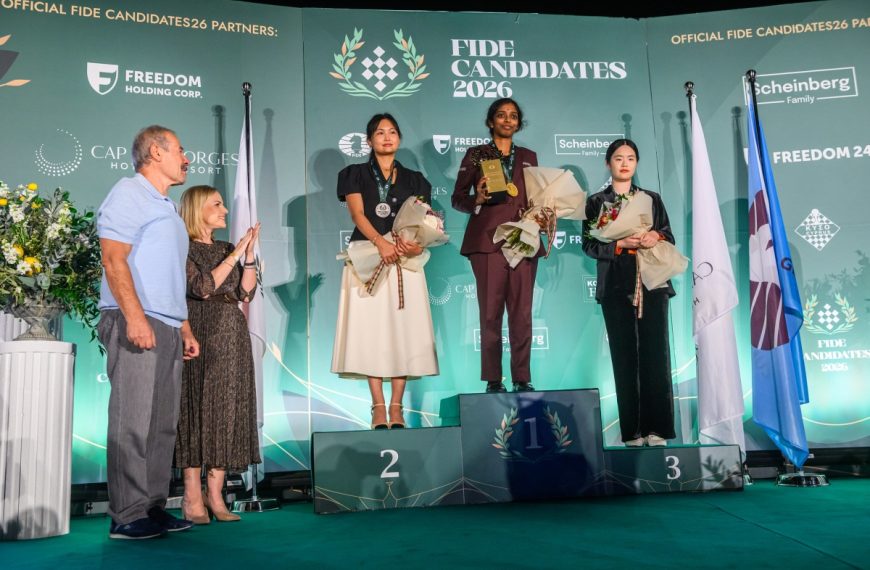
Indian Grandmaster Vaishali Rameshbabu (8.5) emerged the champion ahead of Kazakh GM Bibisara Assaubayeva (8.0) after the 14th round of the FIDE Women’s Candidates 2026 at the Cap St Georges Hotel & Resort in Pegeia, Cyprus…
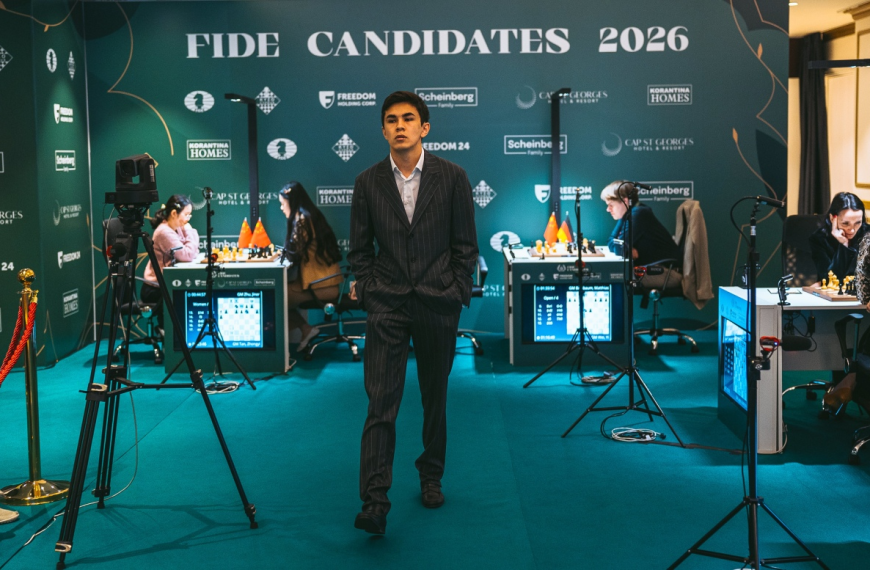
Uzbek Grandmaster Javokhir Sindarov with a stunning 9.5/13 score won the FIDE Candidates 2026 with a round to spare after the 13th round at Cyprus. In the women’s section, GMs Vaishali Rameshbabu (India) & Bibisara Assaubayeva (Kazakhstan) led the table with 7.5 points…
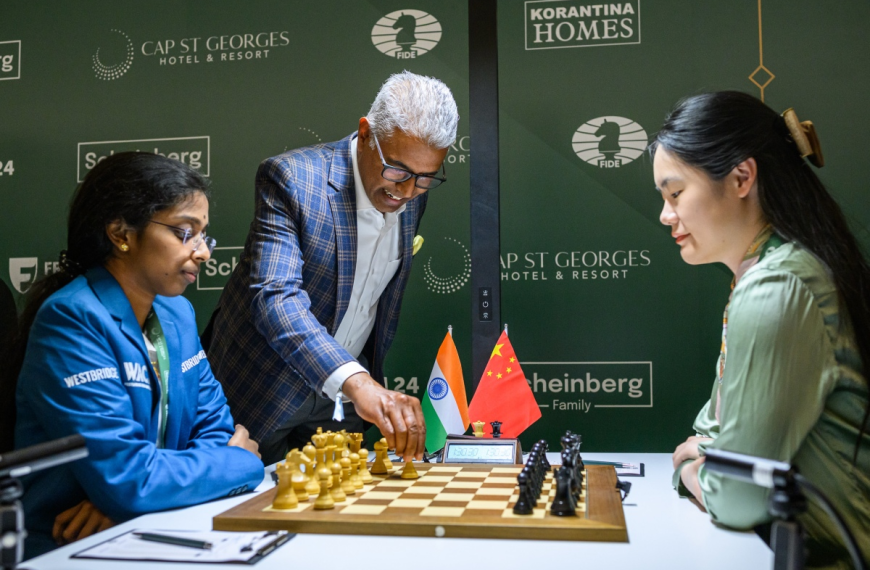
GMs Zhu Jiner & Vaishali Rameshbabu led the FIDE Women’s Candidates 2026 while GM Javokhir Sindarov led the Open section after the 12th round at the Cap St Georges Hotel & Resort, Cyprus…
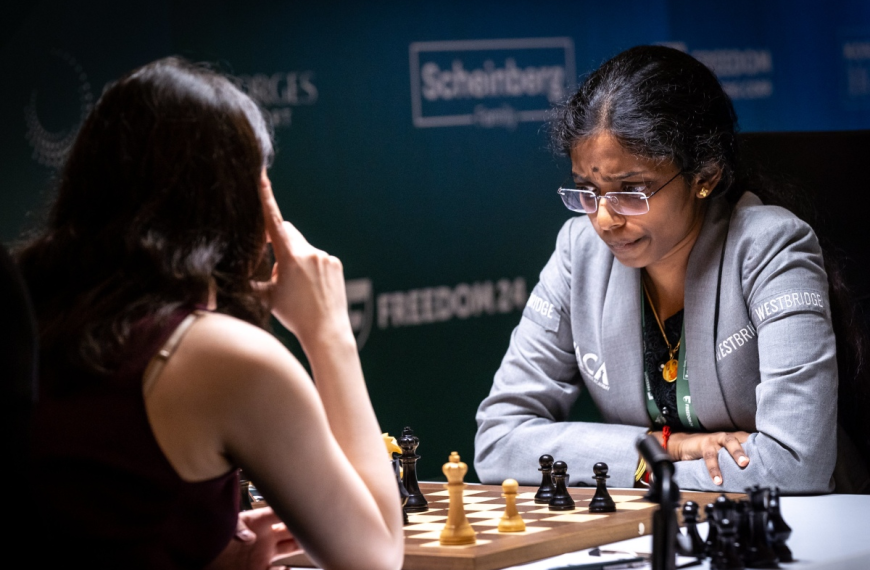
GMs Javokhir Sindarov (Uzbekistan) and Vaishali Rameshbabu (India) led the FIDE Candidates 2026 after the 11th round at the Cap St Georges Hotel and Resort in Pegeia, Cyprus…
How should you study openings? Here are five suggestions.
Posted on December 20, 2025 BY Michael Ludwig
Opening tools are as helpful as they’ve ever been, in the modern age, between computer analysis and readily available collections of games by both Masters and average players. We’ll skip over the step of choosing which opening to play; once you’ve done that, how should you learn it? How should you structure your repertoire?
Here are some tips you might find useful for building and learning.
- To learn an opening thoroughly, you have to play it. Self-study is all well and good, and there’s nothing wrong with enjoying that part of it. But nothing compares to experiencing the positions in real time. However much you train your lines in the background, you won’t play them all perfectly in your games, and the ‘testing’ nature of live action is a fantastic way to learn. That also means that if you change openings a lot, you might be doing yourself a disservice, as you have to learn a whole new field of theory and patterns. And on the flip side, you might discover you don’t like the opening all that much, before you’ve sunk a ton of time into learning it.
- Use tools beyond the engine. Chess computers are phenomenal resources, but playing what it shows is the best move every time will often be inefficient. Not only can it be harder to remember disconnected moves, it can lead you down paths where you will have to keep remembering difficult moves or you might get into big trouble.
One way to navigate this is to use a database like the one on Lichess, which will show you results from real games played by people at customizable rating levels. If it shows a certain move has a strong score for your colour, that’s a good sign that the resulting territory will be easier for you to play. Remember the goal isn’t to play all the ‘best’ moves, the goal is to win!
- A repertoire is useless if you don’t remember it. Try not to get bogged down in the details. To follow up on the previous point, it can ease your workload significantly if you have little rules to follow in a group of positions. Use your head to come up with similarities between lines. For example, against the Benoni you might learn “when Black plays …a6, they want to play …b5, so I should play a4 to stop it.” Or as a more general example, that a white queen is not usually happy on d4 if a black knight can develop to c6 and attack it, but if Black’s queenside knight is missing then that’s a sign the queen can happily be centralized.
If you understand your opening beyond memorization, or can connect the dots when positions are slightly different, you will have much more success playing decent moves, and not burning time trying to play a perfect move. Your future self will thank you!
Chess is too vast to prepare for everything your opponent can possibly play. So lastly, whether you’re building your own repertoire, or using one created by another person, spend most of your time on the lines you will face most often.
- End your lines at a reasonable depth. Again, the goal is not to memorize a game from start to finish — though in some cases, in might turn out that way! Try to pick a logical place to stop, whether that’s castling, or the completion of a key idea, and make a note of what your side should be trying to accomplish next. It’s up to you how specific you want to be. It can also help to leave a ‘marker’ that helps you remember a position, maybe a particular adjective, or the name of a Grandmaster who had played it before. Then if you encounter it in a game you’ll be more confident you’re in the right place.
- Keep a personal file that you update after every game. For example, create a private Lichess Study that contains the skeleton of what you remember, and can input, of your repertoire to start. Every time you play a game, check how well you followed it, and add one move or one concept to the file. That way you are expanding your base slowly and steadily. You can also link to the game you just played so you can refer back to it in the future.
There’s much more to it than that, of course. Openings are the easiest place to sink in a ton of time without actually getting a lot better at chess. A little bit of streamlining can go a long way, and leave you more time to explore the other intricacies of the game.

